Experts who get clients from LinkedIn do a few small things on the same day every week, whether they feel like it or not. The Revenue Rhythm gives each weekday one job: start conversations with people who've already noticed you, follow up with people who went quiet, reconnect with people from your old life, make one invitation, then count five numbers on Friday. It takes about an hour a week, and your lowest number tells you where to start next week.
Why a rhythm beats one big move
Most of the experts I speak to post when they feel inspired. They reply to DMs when they remember and follow up when something feels urgent. And they reconnect with people from their old life… never. So LinkedIn becomes a place they visit instead of a system that works for them.
None of these activities work as a one-off. One great DM won't fill your diary, and neither will one follow-up or one reconnection. What works is doing each of them a little, every week, on the same day. That's the whole idea behind the rhythm.
Each day below comes from an episode of my YouTube series, Visibility Isn't Revenue, so you can watch the full walkthrough for any day you want to go deeper on.
Walk through open doors
The fastest revenue on LinkedIn isn't in your next post. It's in the people who have already noticed you. They've commented, viewed your profile or accepted your connection request, and right now they're hearing nothing back.
Most people treat these signals as vanity metrics. A comment gets a thank you, a profile view gets nothing and a new connection gets a silent accept. Every one of those was a door opener. One conversation with the right person is worth more than a thousand impressions.
- Repeat commenters. Someone commenting on three or four of your posts isn't just being polite.
- Profile viewers, especially repeat visitors who haven't connected
- New connections
- People who regularly react to or share your content
On a consultation call, a client and I spotted a repeat visitor to her profile who hadn't connected or followed. That's a clear sign someone is looking for you on purpose. She reached out, and it turned into a discovery call.
After a comment
Hey [name], really liked your point on my post about [topic]. Sounds like [what their comment suggests is going on for them]. Curious what's been getting in the way?
Reply to the comment publicly first with something that keeps the conversation going. Then, if there's a fit, move it into the DMs.
After a profile view
Hi [name], I see you work with [who they work with]. I've been having a lot of conversations lately about [a relevant topic for their world]. Is that something you're focused on at the moment?
Never say "I noticed you viewed my profile". It feels like being watched. The view is why you reach out. It isn't what you say.
Connection request note
Hi [name], we're both in [shared space] and I've enjoyed your posts on [topic]. Would be good to connect.
No pitch, no link, no "I help people like you". And when someone connects with you, send a short message asking about their world.
Open with a reason that's about them. Be curious and listen. Then ask before you offer. If they say no, you've still built a relationship. If they say yes, you've got a sales conversation they invited.
 Watch the Monday episodeSales Conversations on LinkedIn Without Being Salesy
Follow up
Silence usually isn't a no. It's a full inbox, a school run or a client emergency. Most people who go quiet haven't decided against you. They just haven't decided yet.
I once had someone say she wanted to work with me. I sent my terms and a payment link, then heard nothing, even after a few follow-ups. A few weeks later we were on the same Zoom masterclass, so I messaged her privately. Her email had been broken and she hadn't seen a single message. I sent the documents through LinkedIn instead and we got started.
- Past enquiries
- Event attendees
- Discovery call prospects who didn't buy
- People who said "not now"
- Leads who showed interest and faded
Set a 20-minute timer and go through your LinkedIn messages, emails, calendar and event sign-up lists. Most people are surprised by how long the list gets.
Message 1: the reconnect
pick the one that fitsPast enquiry: Hi [name], you got in touch back in [month] about [what they wanted]. I wanted to check back in. Is this still something you're working on? Event attendee: Hi [name], thanks for coming to [event] last week. I'm curious, what was one thing you took away that you're planning to act on? Discovery call, didn't buy: Hi [name], I've been thinking about our conversation about [their issue]. How have things been since we spoke? Has anything shifted? Said "not now": Hi [name], when we spoke in [month], you mentioned the timing wasn't right until [what they told you]. I wanted to check back in. Has it all settled?
Each one references what they told you. That shows you listened, and it's the opposite of a generic follow-up. Don't repitch.
Message 2: add value
about a week laterHi [name], I came across this and thought of our conversation about [their issue]. There's a useful point in there about [specific point]. Thought you might find it helpful. [link]
Not "just checking in". Give them a reason to reply: an article, a post, a resource or an insight from a similar client. If you've tried twice in one place, change the channel.
Message 3: close the loop
Hi [name], I don't want to keep filling up your inbox, so I'll leave this here. If [their goal] becomes a priority again, just let me know. Happy to pick things back up whenever the time's right.
This one often gets the most replies. If you still hear nothing, you haven't burned a bridge. They know where the door is.
Follow-up won't happen consistently if it lives in your head. Use a spreadsheet, a note on your phone or a CRM with five columns: name, where they came from, last contact, next step, follow-up date. Fifteen minutes a week working through it is plenty.
 Watch the Tuesday episodeWhat to Say When a Lead Goes Quiet
Reconnect
When I started this business, I thought I had to begin from zero, with ads, a big funnel and cold DMs. My first client was someone I already knew. They'd seen how I worked, how I delivered and how I handled problems, so when I mentioned I was doing something new, it was a no-brainer.
Sociologists call these people dormant ties (old colleagues, ex-bosses, past clients) and weak ties (someone you shared a panel with, a friend of a friend). They're often the bridge to new opportunities, because they move in rooms you've never been in. Your closest people have gone a little deaf to what you do, in the nicest possible way. To your old network it's all new.
- Think of one person from your past who'd genuinely be pleased to hear from you. Then find 14 more.
- Filter for relevance: could they be a client, refer you, or amplify what you do? Are they in an adjacent industry?
- Before you message anyone, check your headline describes what you do now, not your old job.
The reintroduction
Hi [name], I realise it's been ages since we caught up. I've moved into my own business since we worked together. I help [who] [do what] now. I'd love to hear what you've been up to as well.
Acknowledge the gap, say what you do in one sentence, and turn it straight back to them. Use your own words but keep the shape. Don't apologise for the gap.
The recommendation ask
my favourite moveWould you be open to writing a short recommendation about our time working together? It really helps as I build visibility for my new business.
It's easy to say yes to, because it's about the past, and it quietly tells them you've started something new. Almost every time, they write it and then ask what you're doing now.
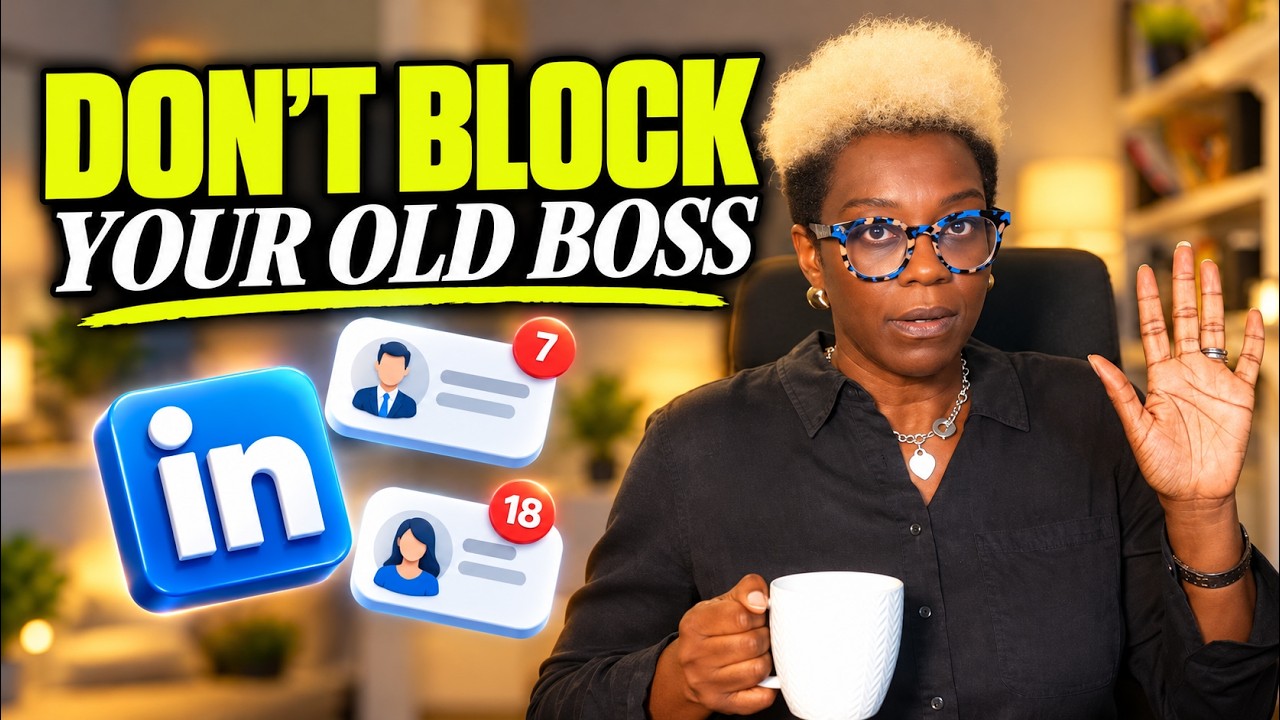 Watch the Wednesday episodeShould You Block Your Old Boss on LinkedIn?
Make one invitation
Just one. Look back over the conversations you started on Monday, Tuesday and Wednesday, and pick the one where there's a real fit. Then ask permission to help.
The invitation
choose oneThat's actually something I help people with quite a lot. Would it be useful if I shared how I'd approach it? Would it be worth a quick chat to see if I can help?
If they say no, that's fine. Somebody now knows who you are and what you do.
- "Thanks for connecting, here's my calendar link." You've skipped from stranger to sales call.
- "Hope you're well" openers that give them nothing to reply to
- Sending 50 copy-and-paste messages. People can tell.
Count your receipts
Skip the likes and write down five numbers for the week: conversations started, follow-ups sent, people reconnected with, invitations made and calls booked. That's your real LinkedIn scoreboard.
Be honest. If most of them are zero, don't panic. That's your baseline, and your receipt. Next Friday you'll have something to beat. Then circle your lowest number, because that's the day in the rhythm you start with next week.
- Hardly any warm signals to work with? Your network has gone quiet. Start with Wednesday.
- Plenty of signals but few conversations? You're seeing the doors and not walking through them. Start with Monday.
- Conversations that start and then go quiet? That's a follow-up gap, not a rejection. Start with Tuesday.
- Good conversations but no calls? This one usually isn't a LinkedIn problem at all. It's an offer problem. People like you and enjoy talking to you, they just don't know what they could buy from you or what the first step looks like. And a confused mind doesn't buy.
Your Friday scoreboard
Do the count today, for last week. Put your five numbers in and it'll tell you where to start. Your weeks save in this browser only, and "Copy as table" lets you paste them into a spreadsheet.
| Week ending | Conv. | Follow-ups | Reconnected | Invitations | Calls |
|---|
Want to see which of these activities is your biggest gap before you start? My free LinkedIn Revenue Roadmap scores you across nine revenue activities in about five minutes and gives you a seven-day plan.
Questions people ask
How much time do I need to spend on LinkedIn to get clients?
About an hour a week, done as small activities on the same day each week. Five relevant conversations will do more than 50 copy-and-paste messages, so keep the numbers small and keep them steady.
What should I track instead of likes and impressions?
Conversations started, follow-ups sent, people reconnected with, invitations made and calls booked. After two or three Fridays you'll see a pattern, and your lowest number shows where the leak is.
What do I do when a lead goes quiet?
Treat silence as "not yet". Send the reconnect, then a message that adds value about a week later, then one that closes the loop. If two messages in the same place get nothing, try another channel. Sometimes the silence is a broken inbox.
Is it awkward to message people from my old job?
Less than you think. You're reintroducing yourself, not pitching. Asking for a LinkedIn recommendation gives you an easy reason to get in touch, and it usually leads them to ask what you're doing now.
I'm having good conversations but nobody books a call. Why?
That's usually an offer problem. People don't know what they could buy from you or what the first step looks like. A clear, low-commitment first step makes Thursday's invitation much easier to say yes to.
What to do next
Do the Friday count for last week, circle your lowest number and start there tomorrow. Then pick whichever of these fits.
 Start the series: Visibility Isn't RevenueBusy on LinkedIn But Not Getting Clients? Here's Why